ESG Impact
Environmental Offset - 100 m³ Project
0
CO2 Avoided (kg)
0
Fly Ash Consumed (kg)
0
Top-soil Saved (m2)

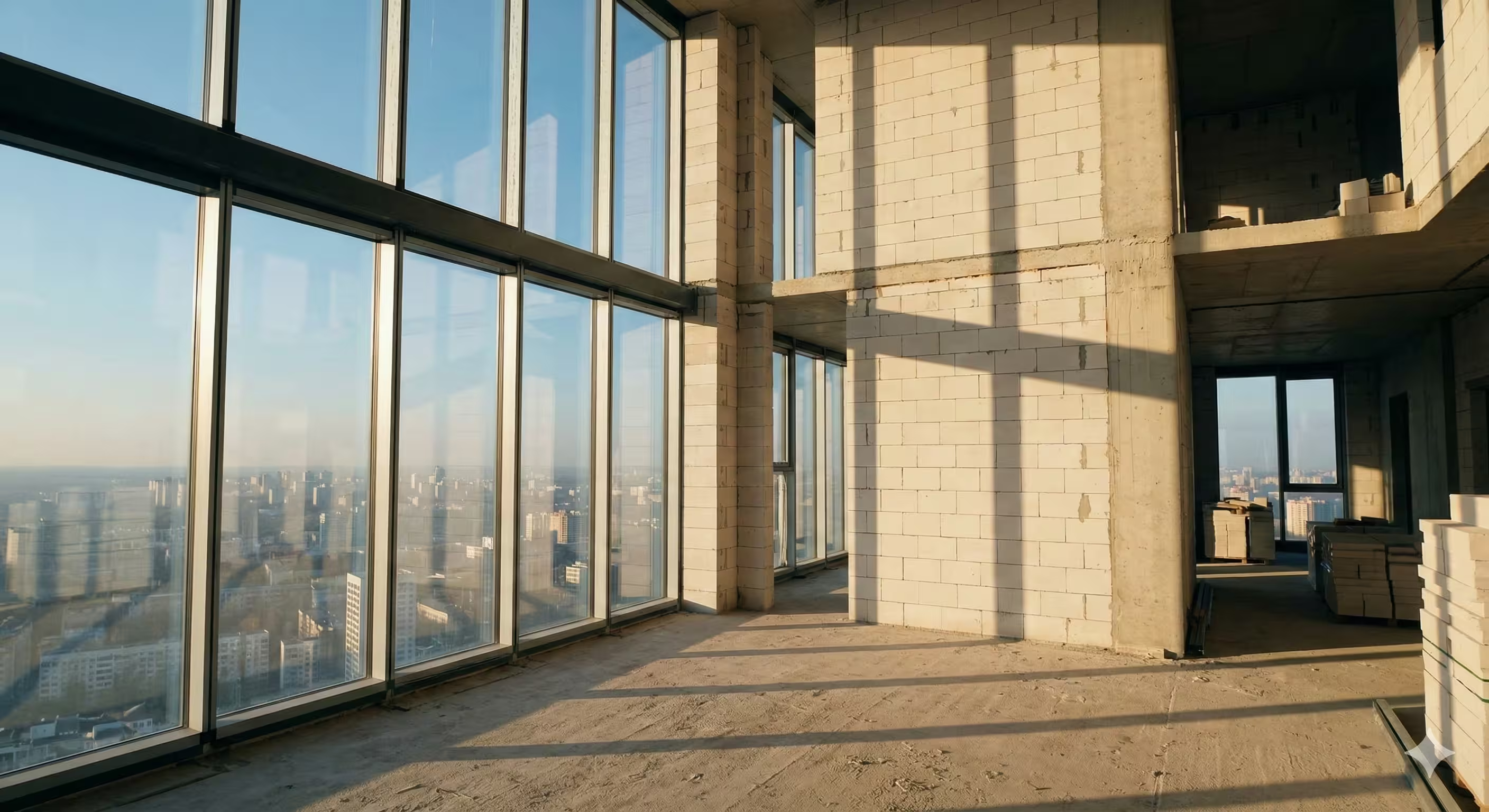
Unotek / Premium AAC
Next-generation Autoclaved Aerated Concrete. Designed for monumental structural integrity and zero environmental compromise.
Clients & Partners
Clients across energy, technology, healthcare & government







Greatly reduces foundation dead load when compared to red clay brick.
Highest fire-resistance ratings per inch — zero combustion.
Drastically reduces HVAC tonnage and lifetime operational costs.
Compressive strengths available in 3, 4, and 6 N/mm² grades for structural design flexibility.
Inorganic AAC composition resists termites and rodents, reducing pest-control maintenance exposure.
Larger, lighter blocks accelerate laying and reduce mason handling effort versus red clay brickwork.
Manufacturing Workflow
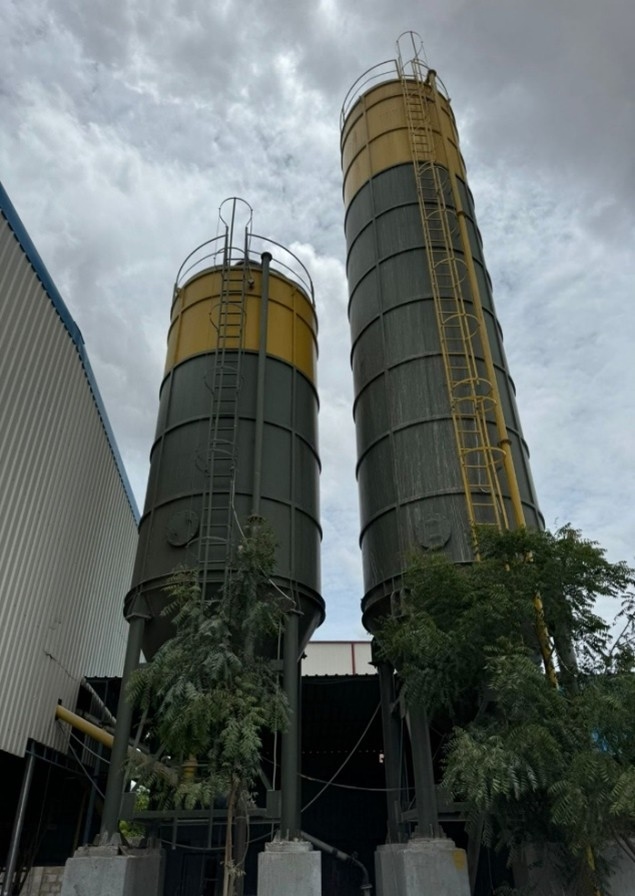
Raw materials including cement and fly ash are securely stored in high-capacity industrial silos, ensuring a continuous supply chain for massive production runs.
The raw materials are transported into the heavy-duty industrial mixer where they are meticulously blended with water and aluminum powder to form a uniform slurry.
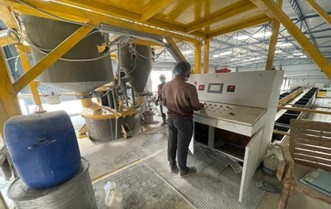
An advanced, fully automated batching control panel manages the exact weights and proportions of the slurry, ensuring zero human error and absolute consistency across batches.
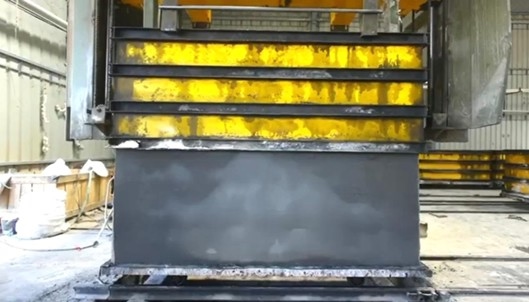
The green block is moved to the cutting line where high-tensile steel wires make the primary horizontal and vertical precision cuts.
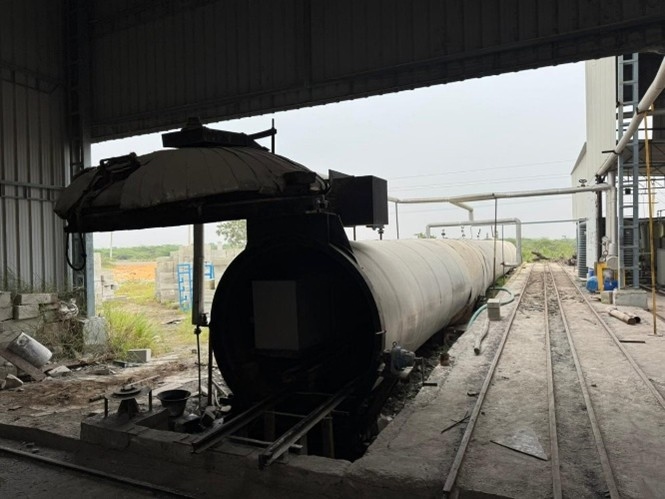
The blocks are loaded into massive industrial autoclaves where they are cured under high-pressure steam (1.2 Mpa) at 185°C for approximately 12 hours.
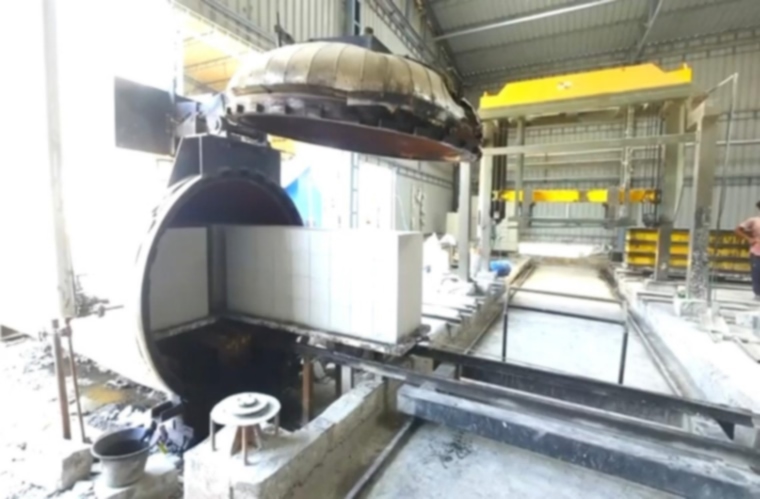
The finished AAC blocks are extracted from the autoclave, having achieved their maximum compressive strength, and are transferred to the store yard ready for dispatch.
Production Capacity
Material Science
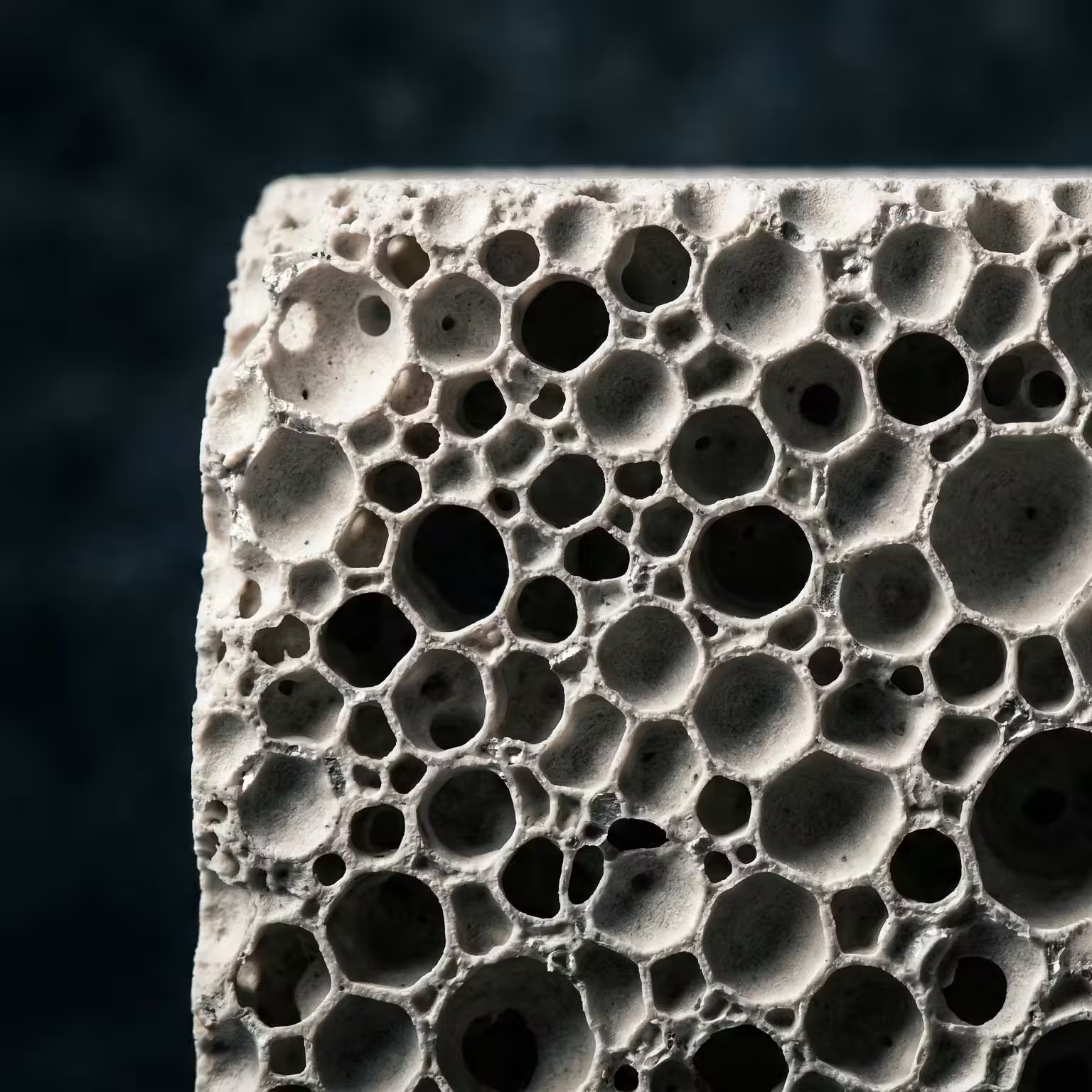
The gas-forming agent responsible for AAC's cellular structure. When aluminium reacts with calcium hydroxide in the alkaline slurry, hydrogen gas is released, creating millions of fine pores throughout the material. After curing, the block contains roughly 70-80% air by volume, giving AAC its lightweight nature, thermal insulation, fire resistance, and acoustic performance.
70% - 80% air by volume
Post-reaction composition
An indispensable by-product of Thermal Power Plants, forming the primary bulk of the block. Consuming this industrial waste mitigates a massive environmental threat — the country produces 60 million tonnes annually, of which only 5% is currently reused.
60M tonnes / year
Annual fly ash output
Structural Confidence

Each block is supported by a traceable batch certificate ensuring full quality transparency. Our technical team collaborates with structural consultants to provide structural load calculations, thermal performance data, and comprehensive specification sheets.
Composition
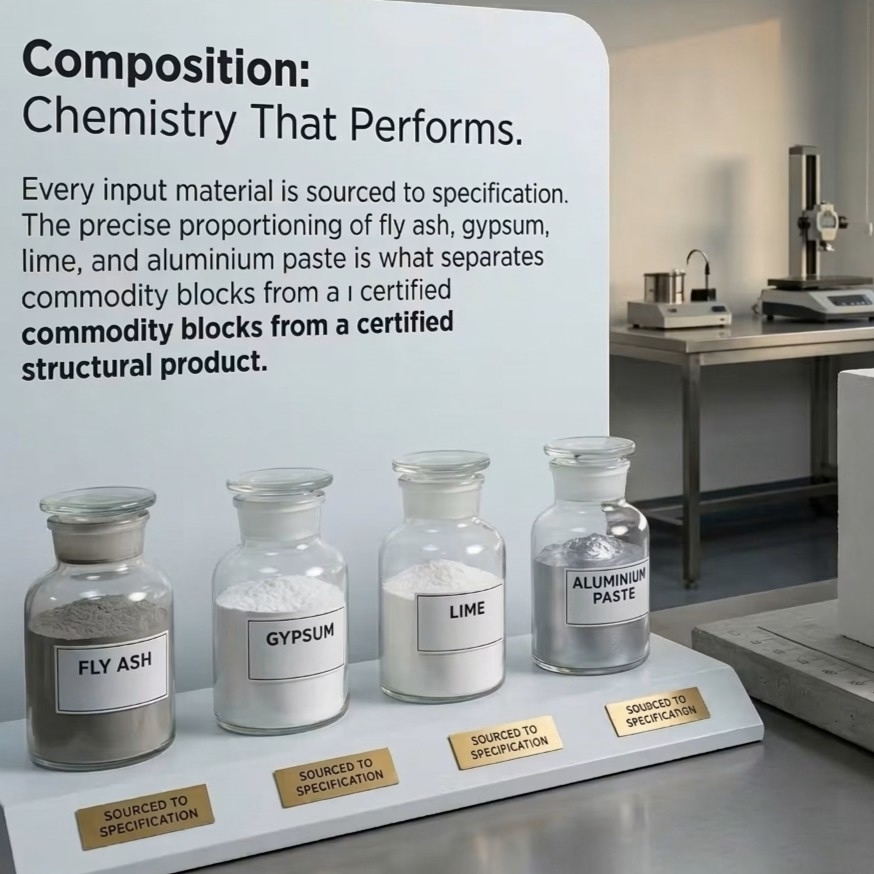
Every raw material is sourced to strict specifications. The precise proportioning of fly ash, gypsum, lime, and aluminium paste is what differentiates certified structural AAC blocks from ordinary commodity blocks.
Applications
AAC blocks are specified across every building typology — from affordable housing to five-star hospitality and heavy industrial.
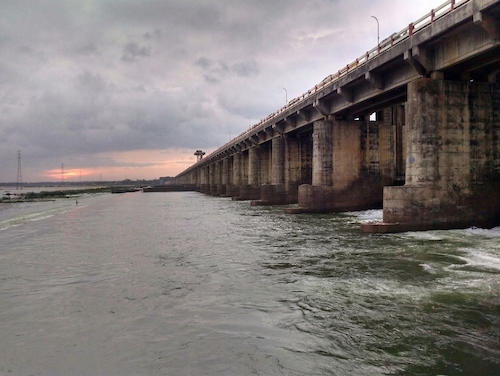 Energy
Large-scale energy infrastructure using AAC blocks for rapid construction, durability, and reduced structural load. Executed with ITD Cementation India Ltd.
 Technology
Industrial park for electronics manufacturing, leveraging AAC for thermal insulation and fast build cycles. Contractor: SRR Projects.
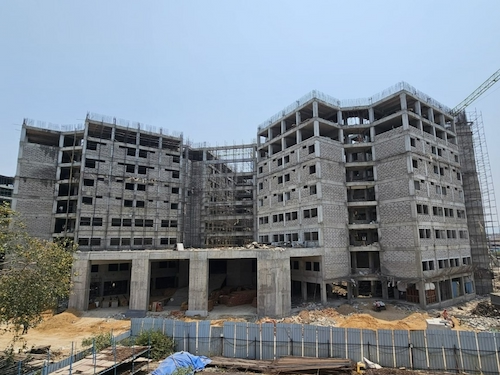 Religious & Heritage
Heritage and religious guest facilities constructed with AAC blocks for longevity, fire safety, and comfort for pilgrims.
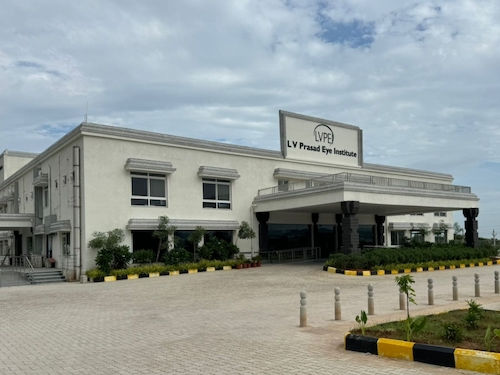 Healthcare
Modern hospital branches built with AAC for infection control, acoustic comfort, and rapid project delivery.
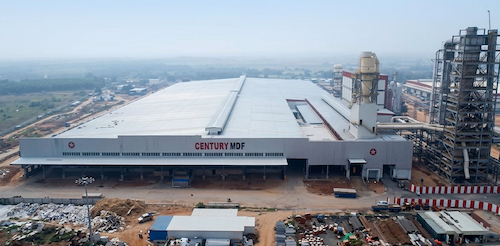 Manufacturing
Industrial manufacturing facility utilizing AAC blocks for robust, low-maintenance, and energy-efficient construction.
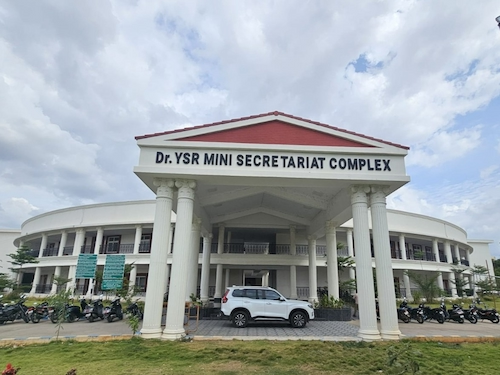 Government & Civic
Civic administration buildings constructed with AAC for sustainability, speed, and long-term cost savings.
Enterprise Tools
Set your volume and structural grade to instantly calculate savings, ESG credits, and HVAC optimisation data.
Red Clay Bricks
0
1 m³ = 590 clay bricks
AAC Blocks (6")
0
1 m³ = 55 AAC blocks
Yield basis: 55 blocks / m³
Partition walls, cladding & non-structural infill
ESG Impact
Environmental Offset - 100 m³ Project
0
CO2 Avoided (kg)
0
Fly Ash Consumed (kg)
0
Top-soil Saved (m2)
Structural ROI
0%
Lighter Material
0%
Foundation Load Cut
0%
Steel Savings
0%
Labour & Plastering
With a thermal conductivity of 0.21 W/m·K, your 100 m³ project typically enables a 20-30% reduction in required HVAC tonnage.
Ready to engineer your next project with premium AAC blocks? Connect with our team for procurement, partnership, or technical support.
Chat With Unotek Team